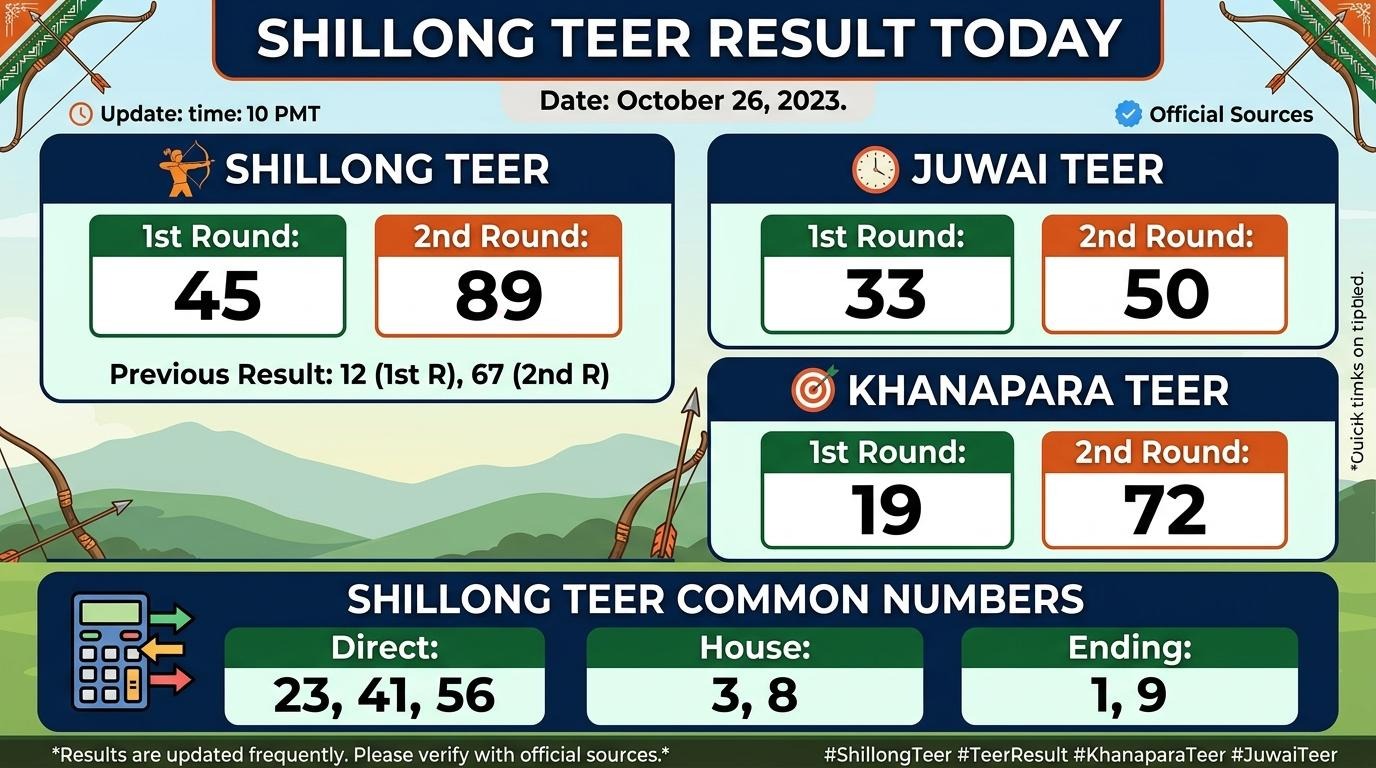
In the scenic hills of Meghalaya, traditional sportsmanship meets modern enthusiasm in one of Northeast India’s most intriguing cultural practices: Shillong Teer. Governed under the official legal framework of the state, this archery-based sport brings together thousands of enthusiasts every day. Organized by the Khasi Hills Archery Sports Association, the game showcases remarkable athletic skill, precise bowmanship, and community engagement.
Whether you are a newcomer curious about how traditional archery translates into daily draws or a seasoned participant tracking daily numbers, understanding the mechanics, rules, and historical roots of Shillong Teer provides valuable insight into this unique game.
What is Shillong Teer?
Shillong Teer is a traditional archery-based lottery game conducted legally under the Meghalaya Amusement and Betting Tax Act. Unlike conventional state lotteries or digital draw systems that rely on computer-generated random numbers, Shillong Teer is entirely physical and human-driven. Its results depend directly on the performance of local archers using traditional bamboo bows and arrows.
Every afternoon—excluding Sundays and declared public holidays—50 professional archers gather at the famous Polo Ground in Shillong. These archers represent 12 distinct local sports clubs affiliated with the archery association. Armed with handmade bamboo arrows, they shoot at a straw target within a strict time limit. The winning outcome is calculated entirely by counting the arrows that successfully hit the designated target.
Mechanics and Timing of the Game
The Shillong Teer competition is split into two distinct rounds held every afternoon. Understanding the game structure helps clarify how the winning digits are determined:
1. First Round (FR)
- Execution: Starting around 3:30 PM, 50 archers take their positions and release 30 arrows each into the target over a 5-minute period. A total of 1,500 arrows are shot.
- Calculation: Once shooting ends, official referees collect the target and publicly count every arrow embedded in it.
- Winning Number: The final outcome is determined by taking the last two digits of the total count. For example, if 1,184 arrows hit the target, the winning number for the first round is 84.
- Declaration: Results are officially declared around 3:45 PM.
2. Second Round (SR)
- Execution: Beginning around 4:15 PM, the same 50 archers participate again, but this time each archer shoots only 20 arrows. A total of 1,000 arrows are shot.
- Calculation: Referees again count the successful hits in front of the gathered audience.
- Winning Number: Just like the first round, the last two digits of the total count determine the result. If 742 arrows land in the target, the winning number for the second round is 42.
- Declaration: Results are officially announced around 4:40 PM.
Tracking Daily Results and Regional Variants
With two rounds taking place every afternoon, staying updated with official updates is crucial for participants. Thousands of fans continuously check the daily shillong teer result immediately following each round to verify draw figures and analyze outcomes.
While Shillong Teer is the most prominent event, several other regional Teer games operate across Meghalaya and surrounding border regions:
- Khanapara Teer: Held near the Assam-Meghalaya border, following a similar archery setup with distinct daily draw times.
- Juwai Teer & Jowai Ladrymbai: Popular variants organized in the Jaintia Hills region.
- Night Teer: Evening editions designed for participants looking for late-day updates.
Many spectators also watch live video feeds or gather at the Polo Ground directly to experience the excitement of watching hundreds of arrows land on the target before the official manual counting begins.
Teer Charts, Target Numbers, and Dream Interpretations
To predict potential outcomes, regular players rely on a combination of historical statistics, numerical charts, and local cultural traditions:
- Teer Charts: Comprehensive tabular logs recording daily First Round and Second Round numbers over past weeks, months, or years. Players study these tables to identify repeating patterns, hot numbers, or cold digits.
- House and Ending Calculations: A numerical breakdown where the “House” represents the tens digit (e.g., House 3 covers 30 to 39) and the “Ending” represents the single unit digit.
- Dream Analysis: A fascinating cultural tradition deeply rooted in local Khasi folklore. Participants believe that specific symbols seen in dreams correspond to particular numbers. For instance, dreaming about water, animals, or traveling is associated with specific two-digit combinations, blending intuition with daily play.
Socio-Economic Impact in Meghalaya
Beyond its entertainment value, Shillong Teer plays a substantial economic role in Meghalaya. The industry supports thousands of livelihoods across the state, including licensed ticket counter operators, official counters, and the archers themselves, who earn daily stipends for participating.
Furthermore, revenues generated through licensing and amusement taxes contribute directly to state revenue and local sports development funds, helping preserve the centuries-old tradition of Khasi archery (Khnang) for future generations.
Conclusion
Shillong Teer stands as a remarkable fusion of ancient tribal archery, social camaraderie, and legal gaming. By grounding its results in the genuine athletic skill of local archers rather than automated machines, it maintains an authentic connection to Meghalaya’s rich cultural heritage. Whether following the action at the Polo Ground or tracking daily outcomes online, understanding how the game functions offers a fascinating glimpse into one of Northeast India’s most vibrant daily traditions.
About the Author